
Are you one of those people who buy the darkest coffee not to feel like a zombie? Well, it is a common belief that you can get a bigger caffeine hit if you have a bold, bitter bean. Do you know that it is not the case, and it is time to bust this huge coffee myth?
The truth is more interesting than a simple “yes” or “no.” It actually comes down to basic math and physics. The roasting method of your coffee beans can indeed change the flavor of the bean. However, there is no direct effect and does not change the caffeine much.
Are you ready to see if your dark roast is really doing its job? Let us look at how heat and weight change your cup. You might be surprised by what actually gives you that morning boost!
The Big Myth: “Bitter Equals Stronger”
Do you confuse bold flavor with extra “fuel”? Most people think dark, oily beans give a bigger caffeine kick. This is a common mistake. When beans roast for a long time, they get a smoky and bitter taste. Your brain thinks this intense flavor means more energy.
The truth is that caffeine is very tough. Heat changes the color and the taste of the bean. However, the roasting process does not actually destroy the caffeine. The “strength” you feel is just the taste of the roast. It does not mean you are getting a higher dose of caffeine. You are simply tasting the char of the bean. Stop choosing your beans based on a myth!
The Science of the Bean: Mass vs. Volume
When we consider the science behind coffee, we need to consider the nature of the beans and how they are affected by heat. When we look at a green, unroasted coffee bean (seed-like in shape), we see that they are solid and heavy.
The Marshmallow vs. The Golf Ball
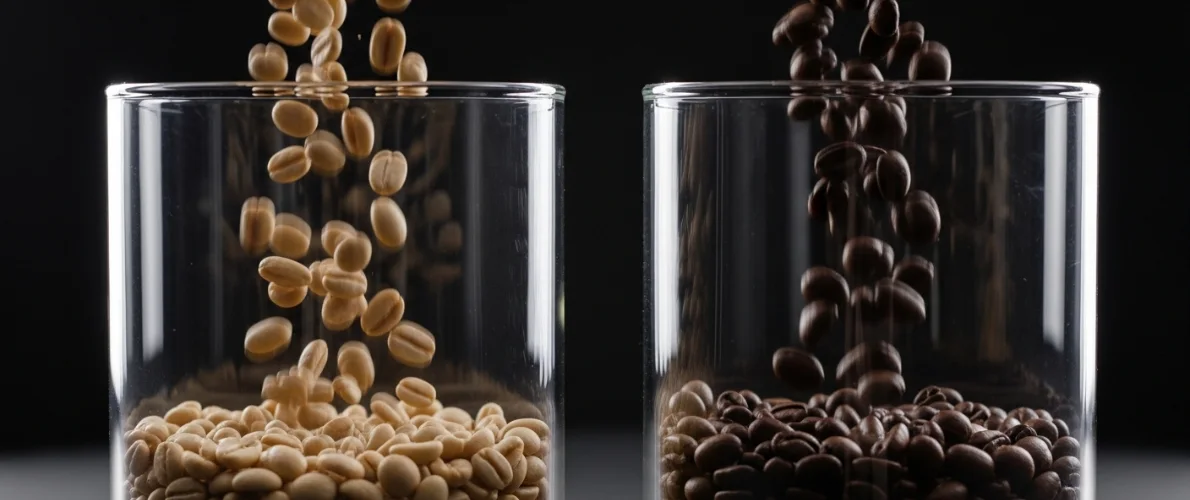
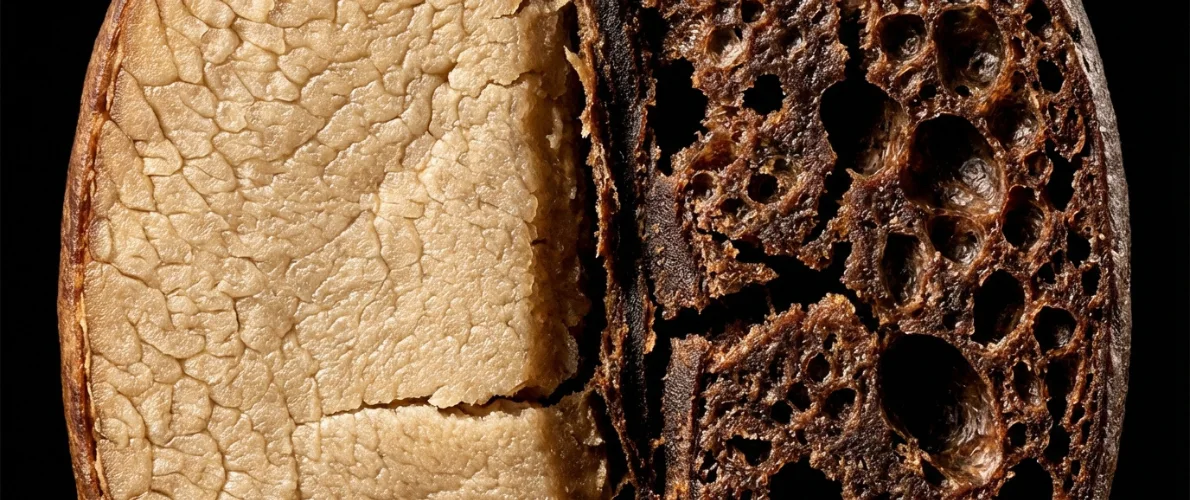
When comparing a Light Roast to a Dark Roast, there are many similarities to be made. For example, a Light Roast resembles a golf ball, which is small in size but very dense, versus a large, more fluffy marshmallow, which will have less density as it is cooked longer until it expands into the shape of a marshmallow.
Now, let’s take this comparison further about roasts; in a sense, they are opposites. A Dark Roast coffee is just like a marshmallow. Coffee beans expand and become larger when you cook them for longer. It loses weight because the water is gone, but it stretches out and gets bigger. So, a dark roast bean is larger but much lighter than a light roast bean. It is like comparing a heavy rock to a big piece of popcorn!
Why This Matters for Your Scoop
When using volume (scopes) vs weight (grams) to measure coffee you’ll notice the following facts.
- If you are using Scopes to measure coffee, then a Light Roast will give you more caffeine than a Dark Roast. Here’s why: the bean sizes (A Light Roast has smaller beans than a Dark Roast), and a larger number of beans will produce more caffeine than fewer beans.
- If you are using grams to measure both the Light and Dark coffees, then a gram of a dark roasted bean may be slightly higher in caffeine than a gram of a Light Roast. This occurs because in order to reach 20 grams of a Dark Bean,n you will need a larger number of beans compared to the amount of beans needed to reach 20 grams with a Light Bean; therefore, the number of beans has more impact than how much caffeine is within the bean.
Does Roasting Temperature Kill Caffeine?
Many people think the high heat of a dark roast kills the caffeine. This is just not true. Most beans are roasted at around 225°C. However, caffeine only starts to break down at 235°C. This means the caffeine stays safe inside the bean during the roast.
The real reason your cup might have less caffeine is the number of beans. Dark roast beans are big and puffy. Because they are larger, fewer of them fit into your scoop. If you have fewer beans, you get less caffeine. It is all about how many beans you actually use to brew your coffee!
Choosing Your Roast: Flavor vs. Energy
So now that you know the real story, how do you choose your beans? The best way to choose coffee beans is based on the type of experience you want to have, not based on an untrue caffeine goal.
Light Roasts
Flavor Profile: Light roasts will usually have fruity, floral, and bright flavours; they’ll often taste similar to tea or berries.
Caffeine: Light roasts will have the highest caffeine content relative to weight.
Best For: If you enjoy “origin flavours” and a clean, bright cup of coffee, try a Kenya AA coffee bean as an example.
The Medium Roast Profile
- Taste: Balanced, sweet, and nutty.
- Caffeine: The middle ground.
- Best For: The “everyday” cup. It is the most popular choice for a reason.
The Dark Roast Profile
- Taste: Smoky, chocolatey, and bold. It has a heavy “mouthfeel.”
- Caffeine: Slightly lower per scoop, but very bold in flavor.
- Best For: People who love a traditional, rich taste. A Sumatra Mandheling is a perfect dark roast choice.
How to Get the Max Kick?
Here is how you can get the “Productivity Superpower” without worrying about the roast:
- Use a Scale
Leave the scooping method to weigh your coffee. It gives you a consistent caffeine boost in every cup.
- Check the Bean Species:
It is important to check the bean species. The Robusta beans are stronger than the Arabica coffee beans. Arabica tastes better, but you can try the Robusta blend if you do not need a bitter taste.
- The Brew Method:
An espresso might taste very “strong” on your tongue. But a big cup of Drip Coffee or a French Press usually has more total caffeine.
Low-Acid Benefits of Dark Roasts
As we mentioned in our previous guides, dark roasts have a secret benefit. They are much easier on your stomach! Because they are roasted longer, they develop NMP. This helper stops your stomach from making too much acid.
So, if you pick a dark roast, do it for your stomach and the rich flavor. Don’t do it because you think it’s a “mega-caffeine” shot. You can enjoy a smooth Costa Rica Tarrazu dark roast and feel great all morning.
Who Wins the Caffeine War?
The difference is very small among different coffee flavors. The roast level only makes minor changes to the caffeine amount that your brain can not differentiate.
It is the bitter flavors that wake up your senses and make you feel more alert. It is a psychological trick. The real energy comes from the total weight of coffee used and the type of bean grown in the soil.
Conclusion:
Stop choosing your coffee based on myths. If you love the smoky, chocolate notes of a dark roast, drink it! If you prefer the bright and flowery taste of a light roast, go for that.
The caffeine difference is too small to worry about. Focus on the quality of the beans and the freshness of the roast. At the end of the day, the best coffee is the one that makes you happy.
Are you ready to test the difference yourself? Grab a bag of our dark Sumatran beans and a light Kenyan roast today. Tell us which one gives you the best morning boost!